
Table of contents
- Raw Material Preparation: Turning Wood into Fibers
- Drying and Moisture Control Before Bonding
- Resin Blending: Bonding Fibers into a Unified Structure
- Mat Formation and Density Profile Control
- Hot Pressing: Creating the MDF Panel
- Cooling, Sanding, and Surface Preparation
- Cutting, Sizing, and Quality Inspection
- How Manufacturing Quality Affects MDF Performance
- What Buyers Should Look for in Well-Made MDF
MDF may look like a simple engineered board, but its performance depends heavily on how manufacturers turn raw wood into finished panels. Differences in fiber preparation, resin bonding, and pressing control often explain why some MDF panels perform well while others fail in furniture and cabinet applications.
MDF is made by refining wood into fibers, bonding those fibers with resin, and compressing the material under heat and pressure. Each production step affects density consistency, strength, surface quality, and long-term stability.
This article explains how MDF is made from wood fibers to finished panels and highlights the manufacturing factors buyers should understand when evaluating MDF quality.
Raw Material Preparation: Turning Wood into Fibers
MDF production begins with wood raw materials. Manufacturers typically use wood chips, sawdust, or small logs sourced from hardwood, softwood, or a controlled mix of both.
Wood Selection and Sorting
Factories select raw wood based on availability, cost, and target board performance. Clean and consistent raw materials help produce stable MDF with uniform density.
Fiber Refining Process
Refining machines break wood chips into fine fibers using heat and mechanical pressure. This process determines fiber length, flexibility, and surface area.
Why Fiber Quality Matters
- Uniform fibers improve internal bonding strength
- Over-refined fibers weaken panel structure
- Inconsistent fibers cause density variation
Drying and Moisture Control Before Bonding
After refining, wood fibers contain moisture that must be carefully controlled. Manufacturers dry fibers to an optimal moisture level before resin blending.
Why Moisture Control Is Critical
- Excess moisture weakens resin bonding
- Insufficient moisture affects pressing quality
- Uneven moisture creates internal stress
Proper drying ensures consistent bonding and stable panel performance.
Resin Blending: Bonding Fibers into a Unified Structure
Manufacturers mix dried fibers with resin adhesive and additives. This stage directly influences MDF strength, formaldehyde emission, and moisture performance.
Common Resin Systems Used in MDF
- Urea formaldehyde (UF) for standard MDF
- Low-emission resin systems for E0 and E1 MDF
- Modified resins for moisture-resistant MDF
Key Resin Application Factors
- Uniform resin distribution
- Correct resin content ratio
- Compatibility with fiber type
Poor resin blending often leads to weak internal bonding and early panel failure.
Mat Formation and Density Profile Control
After blending, fibers form a loose mat. Machines distribute fibers evenly to create consistent thickness before pressing.
Surface and Core Density Distribution
Manufacturers control density across the panel thickness. Surface layers usually have higher density than the core to improve finish quality.
Why Density Profile Matters
- High surface density improves paint and laminate adhesion
- Balanced core density supports strength
- Poor control leads to warping and sanding issues
Hot Pressing: Creating the MDF Panel
Hot pressing compresses the fiber mat under high temperature and pressure. This step defines final panel thickness, density, and internal bonding strength.
Key Pressing Parameters Buyers Should Understand
- Press temperature
- Press pressure
- Press time
Incorrect pressing parameters often cause internal cracks, thickness variation, or weak bonding.
Cooling, Sanding, and Surface Preparation
After pressing, MDF panels cool and stabilize. Factories then sand both surfaces to achieve precise thickness and smoothness.
Why Sanding Quality Affects Performance
- Ensures consistent thickness tolerance
- Improves surface finish quality
- Supports uniform coating and lamination
Cutting, Sizing, and Quality Inspection
Factories cut large panels into standard sizes and conduct quality inspections before packaging.
Key Quality Checks in MDF Production
- Density consistency
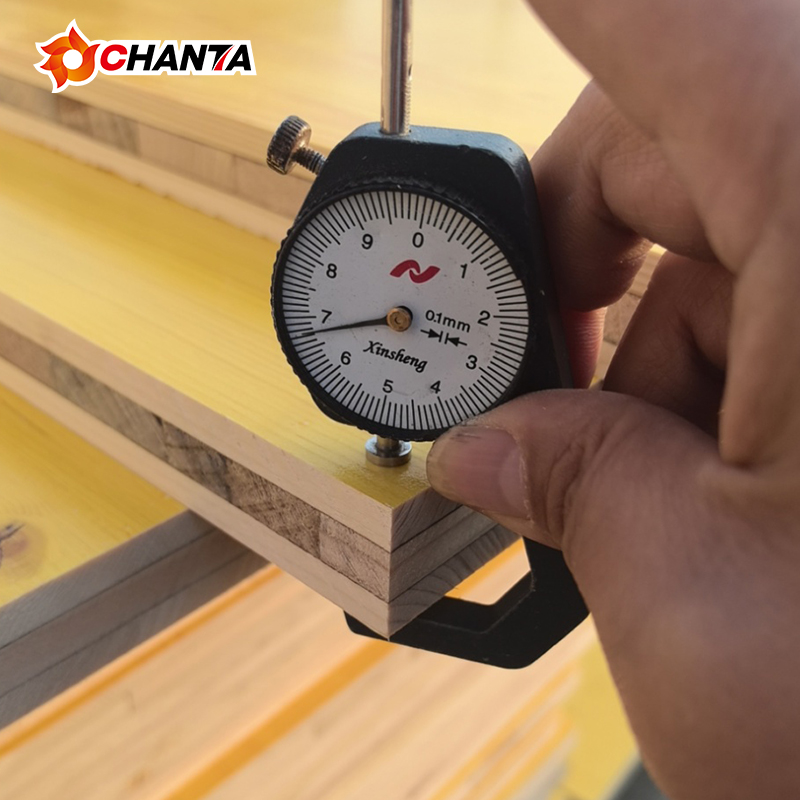
- Thickness tolerance
- Internal bond strength
- Formaldehyde emission level
How Manufacturing Quality Affects MDF Performance
| Manufacturing Factor | Impact on MDF Performance |
|---|---|
| Fiber consistency | Controls strength and stability |
| Resin formulation | Affects bonding and emissions |
| Density control | Determines durability and flatness |
| Sanding accuracy | Improves surface finish |
What Buyers Should Look for in Well-Made MDF
Positive Quality Indicators
- Uniform density across the panel
- Smooth, consistent surfaces
- Stable thickness tolerance
- Clear emission certification
Warning Signs of Poor Manufacturing
- Visible density variation
- Weak internal bonding
- Strong odor indicating high emissions
Conclusion
MDF manufacturing transforms wood fibers into panels through controlled refining, resin bonding, and hot pressing. Each production stage directly affects MDF quality and performance. Buyers who understand how MDF is made can evaluate suppliers more accurately and choose MDF that performs reliably in real applications.










2 Comments