Table of contents
- What Defines the “Best” Film Faced Plywood?
- Core Construction: The Foundation of Durability
- Glue Type: The Key to Structural Integrity
- Film Surface: Protection and Concrete Finish
- Thickness Selection Based on Project Requirements
- Reuse Cycles and Cost Efficiency
- Consistency and Supplier Reliability
- How to Choose the Right Film Faced Plywood for Your Project
Choosing the best film faced plywood for concrete formwork is not simply about selecting the cheapest option or the most common specification. In construction projects, formwork panels directly affect concrete finish quality, reuse cycles, labor efficiency, and overall project cost.
Many buyers face challenges such as inconsistent quality, early panel failure, or unclear supplier specifications. These issues often result from incomplete understanding of what defines high-performance film faced plywood.
This buyer guide explains how to identify the best film faced plywood based on real construction requirements and helps importers, contractors, and distributors make confident sourcing decisions.
What Defines the “Best” Film Faced Plywood?
The best film faced plywood is not a single product type. It is the panel that matches your project’s structural requirements, reuse expectations, and budget. High-performance plywood combines strong core construction, reliable glue bonding, durable film surface, and consistent manufacturing quality.
Instead of focusing on one feature, buyers should evaluate the entire panel structure as a system.
Balanced Performance Matters More Than One Feature
A panel with excellent film but weak core will fail early. A strong core with poor film will reduce surface quality. The best plywood achieves balance across all components.
Core Construction: The Foundation of Durability
The core determines how well plywood withstands pressure, vibration, and repeated use. For concrete formwork, core quality directly affects reuse cycles and structural stability.
High-quality panels use well-arranged veneer layers and dense wood species to maintain strength over time.
Poplar Core vs Hardwood Core
Poplar core plywood offers lighter weight and lower cost, making it suitable for short-term or low-load projects. Hardwood core plywood provides higher strength and longer reuse cycles, making it the preferred choice for heavy-duty construction.
Why Core Consistency Is Critical
Uniform veneer structure ensures even load distribution. Inconsistent cores create weak points that lead to bending or cracking.
Glue Type: The Key to Structural Integrity
Adhesive quality determines how well veneer layers remain bonded during repeated exposure to moisture and pressure. For formwork applications, WBP (Water Boil Proof) phenolic glue is essential.
Without strong bonding, plywood layers separate, causing delamination and early failure.
Why WBP Glue Is Required
WBP glue maintains bonding strength even under wet conditions, ensuring durability across multiple reuse cycles.
Film Surface: Protection and Concrete Finish
The phenolic film surface protects the plywood from abrasion and moisture while also affecting the smoothness of the concrete finish.
High-quality film improves both durability and appearance of the final structure.
Film Weight and Resin Content
Higher resin content generally increases surface hardness and wear resistance.
Surface Smoothness
A smooth and uniform film ensures clean concrete release and reduces surface defects.
Thickness Selection Based on Project Requirements
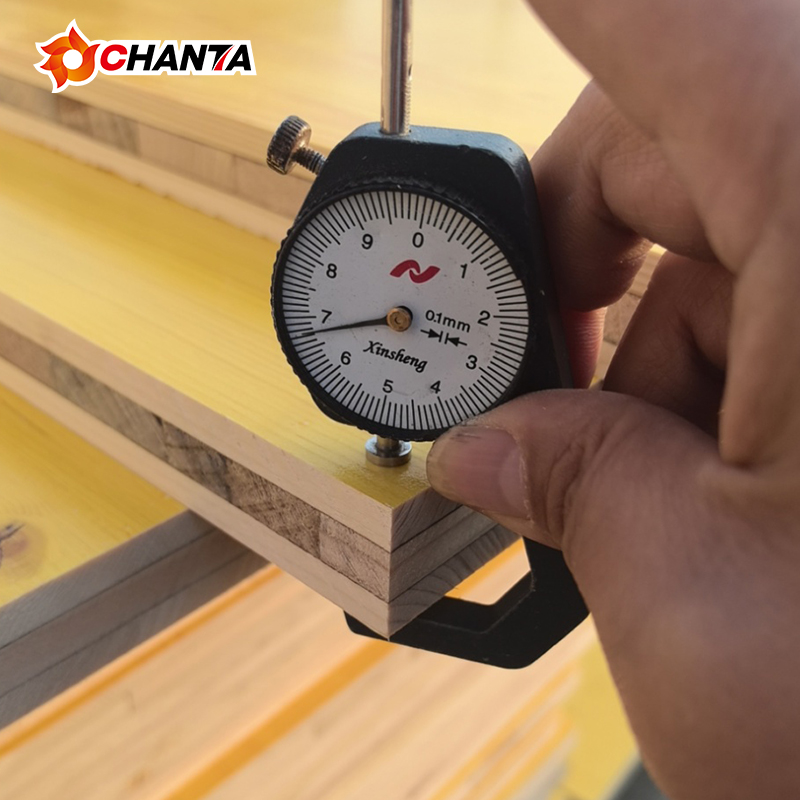
Thickness affects load capacity and structural stability. Choosing the correct thickness ensures safe and efficient formwork performance.
Using panels that are too thin leads to deformation, while overly thick panels increase cost and handling difficulty.
Common Thickness Options
- 15mm for light to medium applications
- 18mm for standard construction projects
- 21mm for heavy-duty or high-load structures
Among these, 18mm film faced plywood is the most widely used option due to its balance between strength and practicality.
Reuse Cycles and Cost Efficiency
The best film faced plywood is not always the cheapest. Buyers should evaluate panels based on cost per use rather than initial price.
Higher-quality panels may cost more upfront but provide more reuse cycles, reducing total project cost.
| Panel Type | Initial Cost | Reuse Cycles | Cost Efficiency |
|---|---|---|---|
| Basic Poplar Core | Low | 5–10 | Moderate |
| Hardwood Core Premium | Higher | 10–20+ | Better Long-Term |
Consistency and Supplier Reliability
Even high-quality specifications are not enough if the supplier cannot maintain consistent production. Variations between batches create serious risks for large projects.
Reliable manufacturers invest in quality control, stable raw materials, and controlled production processes.
For example, experienced manufacturers such as CHANTA focus on maintaining consistent core structure, strong bonding performance, and stable film quality to ensure reliable performance across shipments.
How to Choose the Right Film Faced Plywood for Your Project
Instead of searching for a “one-size-fits-all” solution, buyers should match plywood specifications to project requirements.
For Cost-Sensitive Projects
Poplar core panels with standard specifications may provide sufficient performance at lower cost.
For High-Reuse Projects
Hardwood core panels with WBP glue and high-quality film offer better long-term value.
For Heavy Structural Applications
Thicker panels with strong core construction ensure stability and safety.
Conclusion
The best film faced plywood for concrete formwork depends on core strength, glue quality, film durability, thickness, and supplier reliability. Buyers who evaluate these factors together can avoid common problems and achieve better cost efficiency.
By selecting the right specification and working with reliable manufacturers, contractors and importers can ensure consistent performance, longer reuse cycles, and improved project outcomes.