
Table of contents
MDF (Medium Density Fiberboard) is widely used in furniture manufacturing because of its smooth surface, consistent density, and cost efficiency. However, not all MDF boards perform equally. Choosing the right MDF for furniture directly affects durability, finishing quality, and long-term performance.
Many buyers focus only on price or thickness, but the best MDF for furniture depends on multiple factors, including density, resin type, moisture resistance, and intended application.
This buyer guide explains how to choose the best MDF for furniture and what specifications matter most for different use cases.
What Makes MDF Suitable for Furniture
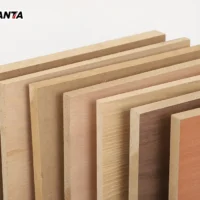
MDF is popular in furniture production because it offers a smooth and uniform surface that works well for painting, laminating, and veneering. Unlike solid wood, MDF does not have knots or grain variations, which makes it easier to machine and finish.
However, not all MDF boards are equally suitable for furniture applications. Performance depends on internal density, bonding strength, and moisture resistance.
Surface Smoothness
A smooth surface allows better finishing results, especially for painted or laminated furniture.
Consistent Density
Uniform density ensures stable machining and reduces the risk of cracking or uneven cutting.
Key Factors When Choosing MDF for Furniture
Buyers should evaluate several technical factors before selecting MDF for furniture production. These factors determine both product quality and long-term durability.
Density of MDF
Density directly affects strength and durability. Higher-density MDF provides better screw holding and structural stability.
Glue and Resin Type
The type of adhesive used influences both bonding strength and formaldehyde emission levels. Low-emission boards such as E1 or E0 MDF are preferred for indoor furniture.
Moisture Resistance
Standard MDF performs poorly in humid environments. Moisture-resistant MDF (MR MDF) is better suited for kitchens or bathrooms.
Thickness Selection
Different furniture components require different thicknesses. For example, cabinet panels often use 15mm or 18mm boards, while back panels use thinner sheets.
Best MDF Types for Different Furniture Applications
The best MDF choice depends on how the furniture will be used. Different applications require different performance characteristics.
| Application | Recommended MDF Type | Key Requirement |
|---|---|---|
| Cabinets | High-density MDF (E1/E0) | Strength and smooth finish |
| Wardrobes | Standard MDF | Cost efficiency and stability |
| Kitchen Furniture | Moisture-resistant MDF | Water resistance |
| Decorative Panels | Ultra-smooth MDF | Surface quality |
| Back Panels | Thin MDF | Lightweight and cost |
Comparing MDF Grades for Furniture Use
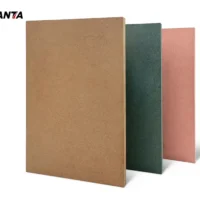
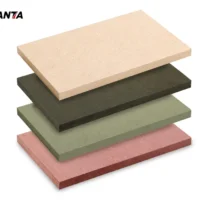
MDF boards are available in different grades based on density, moisture resistance, and environmental standards. Choosing the right grade improves performance and reduces long-term issues.
| MDF Type | Features | Best Use |
|---|---|---|
| Standard MDF | Cost-effective, smooth surface | General furniture |
| Moisture Resistant MDF | Improved water resistance | Kitchens, humid areas |
| High Density MDF | Stronger and more durable | Cabinets, load-bearing parts |
| E0 / E1 MDF | Low formaldehyde emission | Indoor furniture |
Common Mistakes Buyers Should Avoid
Many buyers make decisions based only on price or basic specifications. This often leads to performance issues after production.
Choosing Low-Density MDF for Structural Parts
Low-density boards may reduce cost but can lead to weak furniture and shorter lifespan.
Ignoring Moisture Conditions
Using standard MDF in humid environments causes swelling and damage over time.
Overlooking Emission Standards
Using high-emission MDF may cause compliance issues in export markets.
Supplier Selection and Quality Consistency
Consistent quality is critical for furniture production, especially for large orders. Variations in density, surface quality, or bonding can create production issues.
Reliable manufacturers maintain strict control over raw materials and production processes. For example, manufacturers such as CHANTA focus on consistent density control, stable resin systems, and uniform surface quality to ensure reliable MDF performance.
Cost vs Performance: How to Make the Right Decision
The best MDF for furniture is not always the cheapest option. Buyers should consider long-term performance, not just initial cost.
Higher-quality MDF often reduces waste, improves machining efficiency, and enhances final product quality.
Evaluate Cost Per Finished Product
Better MDF reduces defects and rework, improving overall production efficiency.
Balance Budget and Quality
Choosing the right specification ensures stable performance without unnecessary cost increases.
Conclusion
The best MDF for furniture depends on density, resin type, moisture resistance, thickness, and application requirements. Buyers who evaluate these factors carefully can select MDF that delivers consistent performance and high-quality results.
Working with reliable suppliers and choosing the correct MDF type for each application ensures better durability, improved finishing, and long-term value in furniture production.






1 Comment