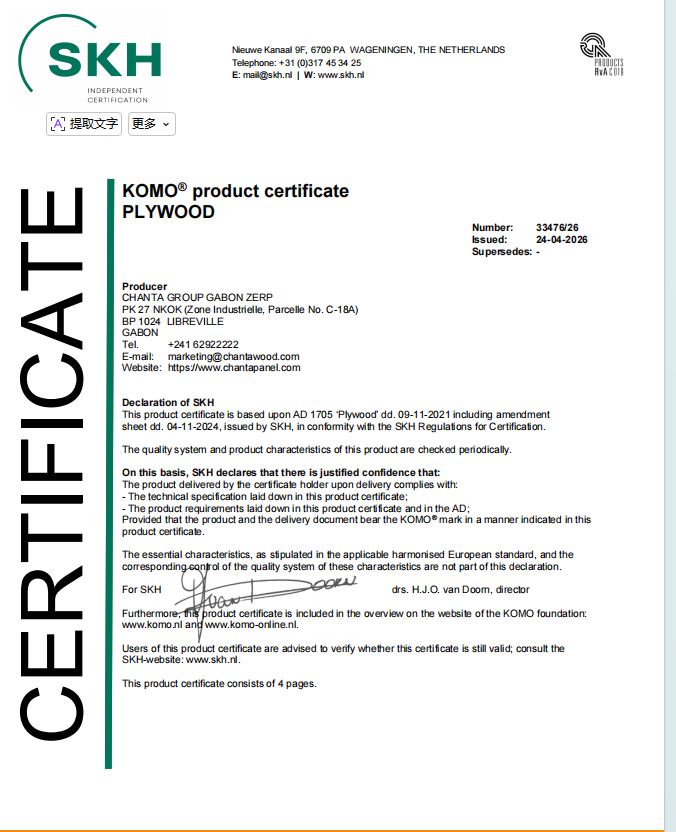
Chanta Gabon Obtains Latest SKH KOMO Product Certificate for Plywood
We are pleased to announce that Chanta Gabon has successfully obtained the latest SKH KOMO Product Certificate for Plywood, issued by SKH in the Netherlands. This certification marks an important milestone for Chanta Gabon and reflects our continuous commitment to product quality, stable production management and international market standards. As…

CHANTA Gabon Factory Officially Launches Production
The official opening of the CHANTA Gabon overseas factory marked an important milestone in the company’s global development strategy. With the participation of government representatives, industry partners, and invited guests, the opening ceremony celebrated the launch of a modern manufacturing base dedicated to Okoume plywood and Okoume veneer production. Located…
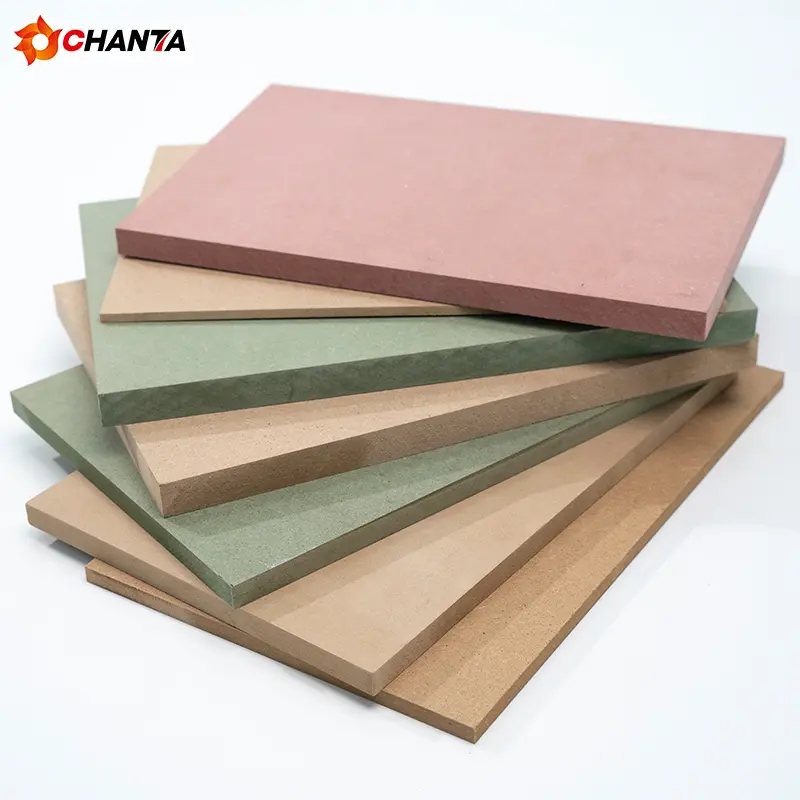
Can MDF Be Used in Kitchens? What Buyers Should Know Before Choosing
Many buyers like the smooth surface and lower cost of MDF board. Because of that, MDF appears in many kitchen projects around the world. However, kitchens create a very different environment compared with bedrooms or living rooms. Heat, steam, water, and daily cleaning all affect board performance over time. This…
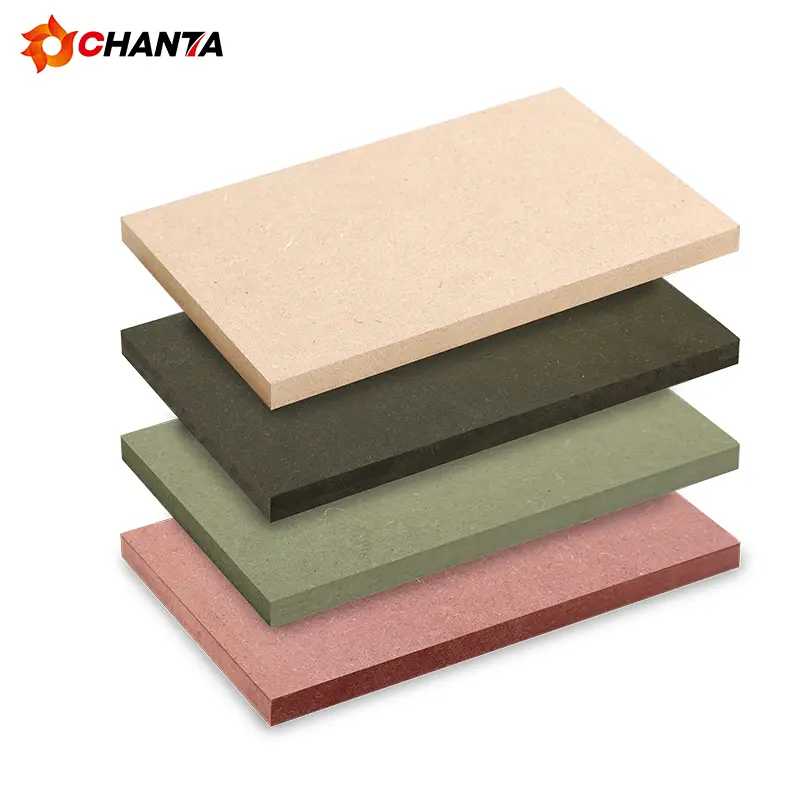
Is MDF Strong Enough for Furniture? What Buyers Should Know
Many buyers ask the same question before choosing MDF for furniture projects. Is MDF actually strong enough for long-term use, or does it only work for low-cost furniture? The answer depends on how you use the board. In some applications, MDF board performs very well. In other situations, buyers may…
MDF vs HDF: What’s the Real Difference and Which One Should You Choose?
Many buyers compare MDF and HDF when selecting materials for furniture, cabinets, wall panels, or interior decoration. At first glance, both products look very similar. They both use wood fibers, both provide smooth surfaces, and both appear in furniture factories around the world. However, the internal structure creates major differences…
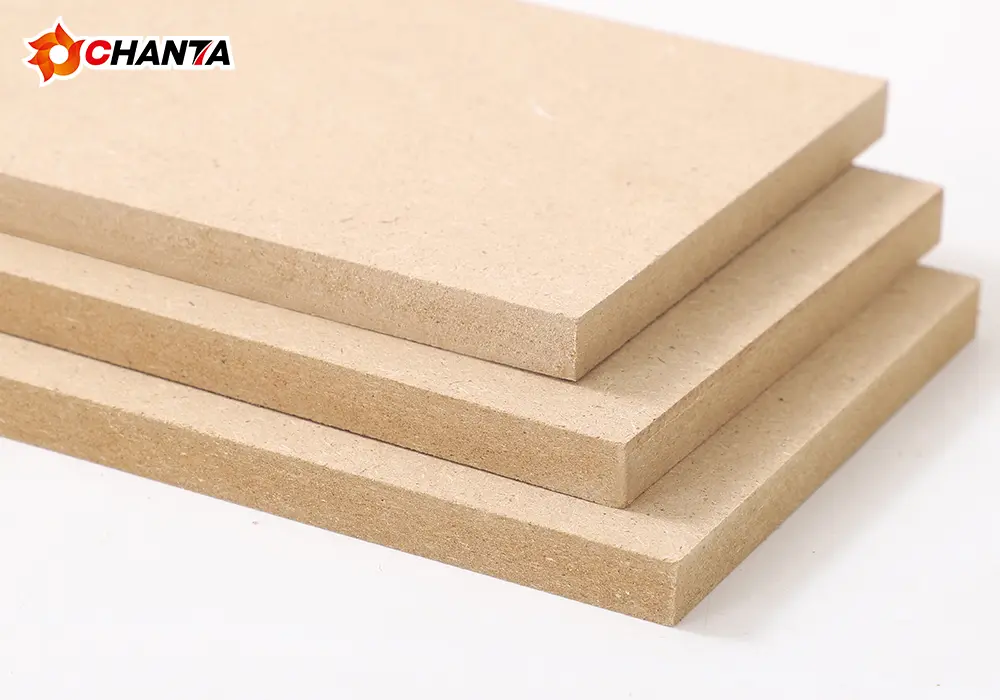
MDF vs Plywood: Which One Should You Choose?
Many buyers compare MDF and plywood when planning furniture or interior projects. Both materials look similar at first, but they behave very differently in real use. This is where confusion often starts. Some buyers choose based on price, while others follow common advice. In practice, the right choice depends on…

What Affects MDF Quality? Key Factors Buyers Should Understand
Many MDF boards look the same at first glance. The surface feels smooth. The color looks similar. Buyers often assume quality stays consistent across suppliers. That assumption usually leads to problems later. If you read how MDF is made, you already know the process involves several steps. Each step can…
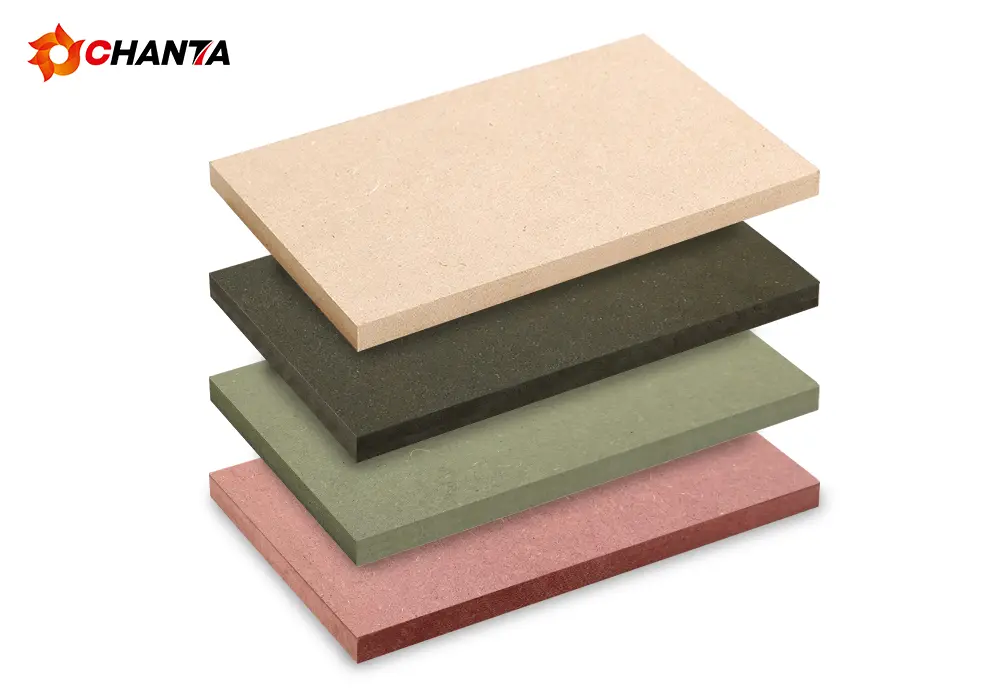
How MDF Is Made: Step-by-Step Manufacturing Process
MDF looks simple from the outside. It feels smooth and uniform. Many buyers assume it comes from a basic process. That is not the case. In reality, MDF production involves several controlled steps. Each step affects density, strength, and surface quality. This is where differences between suppliers often begin. If…

Is MDF Waterproof? Honestly, It’s Not That Simple
People keep asking whether MDF is waterproof. I get why. It looks dense, smooth, almost like it should handle moisture just fine. But no, it doesn’t. Not really. That said, if you just stop at “no”, you’ll probably misunderstand how MDF actually behaves in real use. Because the problem with…