
Table of contents
Film faced plywood is widely used in concrete formwork because of its durability, smooth surface, and ability to support repeated use. However, many contractors and buyers experience problems such as swelling, delamination, surface damage, or reduced reuse cycles.
These issues often appear after only a few uses and can significantly increase project costs. In most cases, the problems are not caused by a single factor but by a combination of material quality, handling practices, and environmental conditions.
This article explains the most common problems with film faced plywood and provides practical solutions to avoid them in real construction applications.
Surface Film Damage and Wear
The phenolic film surface protects the plywood from moisture and abrasion. Once this protective layer becomes damaged, the plywood underneath is exposed and performance declines quickly.
Surface damage is one of the earliest signs of plywood failure and often leads to reduced reuse cycles.
Common Causes of Film Damage
- Using sharp tools during stripping
- Excessive force when removing panels
- Concrete residue left on the surface
How to Avoid Film Damage
- Use proper formwork release agents before each pour
- Remove panels carefully without sharp tools
- Clean the surface immediately after each use
Edge Swelling and Water Absorption
Edges are the most vulnerable part of film faced plywood because they are not fully protected by the film layer. When edges absorb moisture, they begin to swell, which weakens the panel structure.
Repeated wet and dry cycles accelerate this process and reduce panel lifespan.
Common Causes of Edge Swelling
- Damaged or worn edge sealing
- Panels stored on wet ground
- Exposure to rain without protection
How to Prevent Edge Damage
- Reapply waterproof edge sealant when needed
- Store panels on elevated surfaces
- Keep panels covered but ventilated
Delamination Between Veneer Layers
Delamination occurs when the adhesive bond between veneer layers weakens and separates. This problem reduces structural strength and makes panels unusable.
Once delamination starts, it usually spreads quickly through the panel.
Why Delamination Happens
- Low-quality glue or insufficient bonding
- Repeated moisture exposure
- Poor manufacturing control
How to Avoid Delamination
- Choose plywood with WBP (Water Boil Proof) glue
- Avoid prolonged exposure to water
- Select reliable manufacturers with consistent production quality
Bending and Structural Deformation
Plywood panels may bend or deform under heavy concrete loads or repeated use. This affects the accuracy of formwork and can lead to poor concrete finish.
Structural deformation often results from insufficient panel thickness or weak core construction.
Main Causes of Deformation
- Using panels that are too thin for the project
- Low-density core materials
- Uneven load distribution during pouring
How to Prevent Deformation
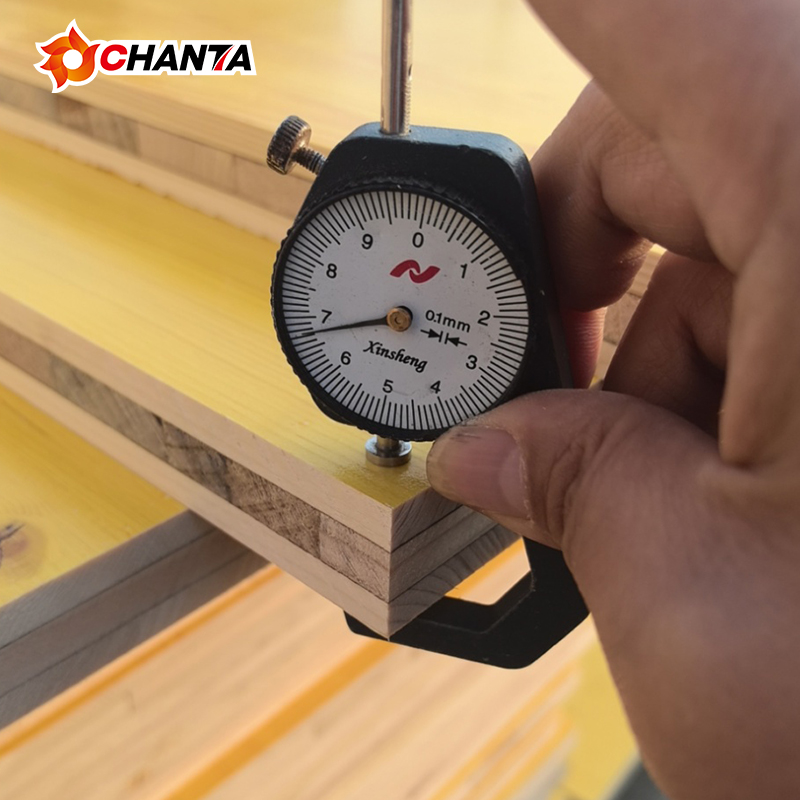
- Select appropriate thickness such as 18mm for heavy-duty use
- Use panels with strong hardwood cores when needed
- Ensure proper support spacing in formwork systems
Reduced Reuse Cycles
One of the most common complaints is that film faced plywood does not last as long as expected. Panels may fail after only a few uses instead of reaching expected reuse cycles.
This problem usually results from a combination of factors rather than a single issue.
Factors That Reduce Reuse Performance
- Poor film quality
- Weak core construction
- Improper handling and maintenance
How to Extend Reuse Cycles
- Use release agents consistently
- Clean panels after each use
- Protect edges and store panels properly
Inconsistent Quality Between Batches
Some buyers experience differences in quality between shipments from the same supplier. This inconsistency creates uncertainty in project planning.
Stable manufacturing processes and quality control systems are essential to maintain consistency.
Why Quality Inconsistency Happens
- Different raw material sources
- Changes in production conditions
- Lack of strict quality control
How to Reduce This Risk
- Work with experienced suppliers
- Request detailed product specifications
- Build long-term supplier relationships
Choosing Reliable Manufacturers Matters
Many of the problems mentioned above can be avoided by selecting the right supplier. Manufacturers with strong quality control systems produce panels with consistent core construction, reliable glue bonding, and stable film performance.
For example, experienced manufacturers such as CHANTA focus on controlled production processes, consistent raw materials, and strict inspection standards to ensure stable product quality across batches.
Conclusion
Common problems with film faced plywood include surface damage, edge swelling, delamination, deformation, and reduced reuse cycles. These issues often result from a combination of material quality and job site handling practices.
By understanding these problems and applying proper maintenance techniques, contractors can significantly improve panel performance and reduce overall project costs. Choosing reliable suppliers and using correct specifications further ensures long-term success in concrete formwork applications.





1 Comment