
Table of contents
- Raw Material Quality Matters More Than Expected
- Fiber Processing Affects Internal Strength
- Resin Quality and Distribution
- Pressing Conditions Shape Final Performance
- Density Consistency Across the Board
- Surface Quality and Sanding Precision
- Quality Differences in Real Use
- Why Supplier Consistency Is Critical
Many MDF boards look the same at first glance. The surface feels smooth. The color looks similar. Buyers often assume quality stays consistent across suppliers.
That assumption usually leads to problems later.
If you read how MDF is made, you already know the process involves several steps. Each step can change the final result. This is where quality differences begin.
Raw Material Quality Matters More Than Expected
Everything starts with raw material. This sounds obvious, but many buyers overlook it.
Low-quality wood leads to unstable fibers. That affects density and bonding later.
Type of Wood Used
Manufacturers often mix hardwood and softwood. A balanced mix improves fiber structure.
Impurity Control
Dust, sand, and metal reduce board quality. Clean material leads to better consistency.
Fiber Processing Affects Internal Strength
Once raw material enters refining, the process becomes more technical.
This stage decides how fibers behave inside the board.
Fiber Size and Uniformity
Even fibers create stable boards. Uneven fibers lead to weak spots.
Refining Precision
Controlled refining improves bonding. Poor control leads to fragile panels.
This is something many buyers never see directly.
Resin Quality and Distribution
Resin connects fibers together. Without proper bonding, MDF loses strength quickly.
This factor also affects emissions and durability.
Type of Adhesive
Different resins produce different performance levels. Low-quality resin weakens the board.
Even Mixing
Uniform resin distribution ensures consistent strength across the panel.
Uneven mixing causes hidden defects.
Pressing Conditions Shape Final Performance
Pressing turns loose fibers into solid boards. This step locks in density and structure.
Small changes here create big differences.
Temperature Control
Heat activates the resin. Incorrect temperature leads to weak bonding.
ضغط and Time
Proper pressure ensures compact structure. Short pressing time reduces strength.
In real production, this stage often separates high-end MDF from low-grade boards.
Density Consistency Across the Board
Density is one of the most important indicators. But average density alone is not enough.
What really matters is consistency.
Core vs Surface Density
Balanced density improves strength and machining performance.
Uniform Distribution
Uneven density leads to cutting issues and weaker areas.
Surface Quality and Sanding Precision
After pressing, boards go through sanding. This step improves appearance and usability.
But sanding also affects performance more than expected.
Smoothness
Good sanding creates a clean surface for painting or laminating.
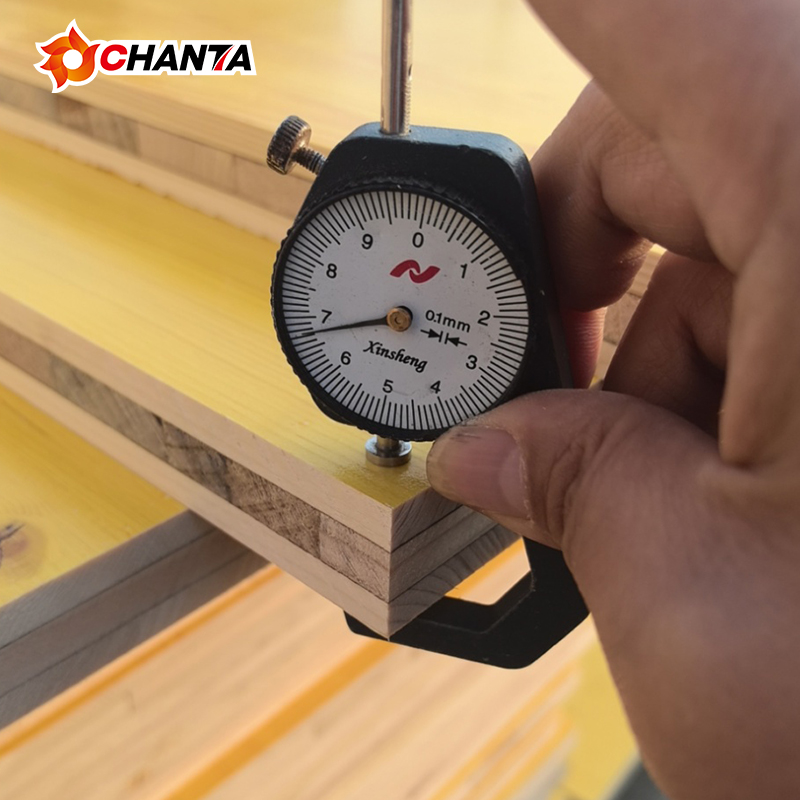
Thickness Accuracy
Precise calibration ensures panels fit production requirements.
Quality Differences in Real Use
At first, two MDF boards may look identical. In real use, differences appear.
Some boards cut cleanly. Others chip or break. Some hold screws better.
This usually comes back to production quality.
| Factor | Low Quality MDF | High Quality MDF |
|---|---|---|
| Fiber Structure | Uneven | Uniform |
| Bonding Strength | Weak | Strong |
| Surface Finish | Rough | Smooth |
| Density | Inconsistent | Stable |
Why Supplier Consistency Is Critical
Specifications on paper do not tell the full story. Consistency across batches matters more.
Buyers often face issues when quality changes between shipments.
This is why experienced buyers focus on reliable manufacturers.
Manufacturers like CHANTA pay attention to fiber control, resin mixing, and pressing stability. That helps maintain consistent MDF performance.
Conclusion
MDF quality depends on multiple factors. Raw material, fiber processing, resin, and pressing all play a role.
These steps connect closely to how MDF is made. Understanding them helps buyers make better decisions.
In practice, choosing the right supplier matters as much as choosing the right specification.









1 Comment