
Table of contents
Film faced plywood is widely used in concrete formwork because of its durability, moisture resistance, and ability to deliver smooth concrete surfaces. However, the quality of film faced plywood varies greatly across manufacturers and markets. Two panels that look similar on the surface may perform very differently on construction sites.
For contractors, distributors, and importers, identifying high quality film faced plywood is essential for controlling project costs and avoiding unexpected material failures. Panels that wear out too quickly increase replacement costs and slow down construction schedules.
This guide explains the key factors that determine film faced plywood quality and how buyers can evaluate panels before making purchasing decisions.
Start by Checking the Surface Film Quality
The phenolic film surface is the most visible part of film faced plywood, and it provides protection against abrasion, moisture, and concrete adhesion. A high-quality film surface should appear smooth, uniform, and free from defects.
However, visual appearance alone is not enough. Buyers should also evaluate the film thickness, resin content, and bonding strength to the plywood core.
Look for Consistent Film Texture
High quality film faced plywood has a consistent surface texture without bubbles, wrinkles, or uneven patches. Irregular texture often indicates poor film bonding or low-quality film paper.
Check Film Adhesion
The phenolic film should bond tightly to the plywood surface. When the film separates easily from the veneer layer, it signals poor manufacturing control.
Evaluate the Core Construction
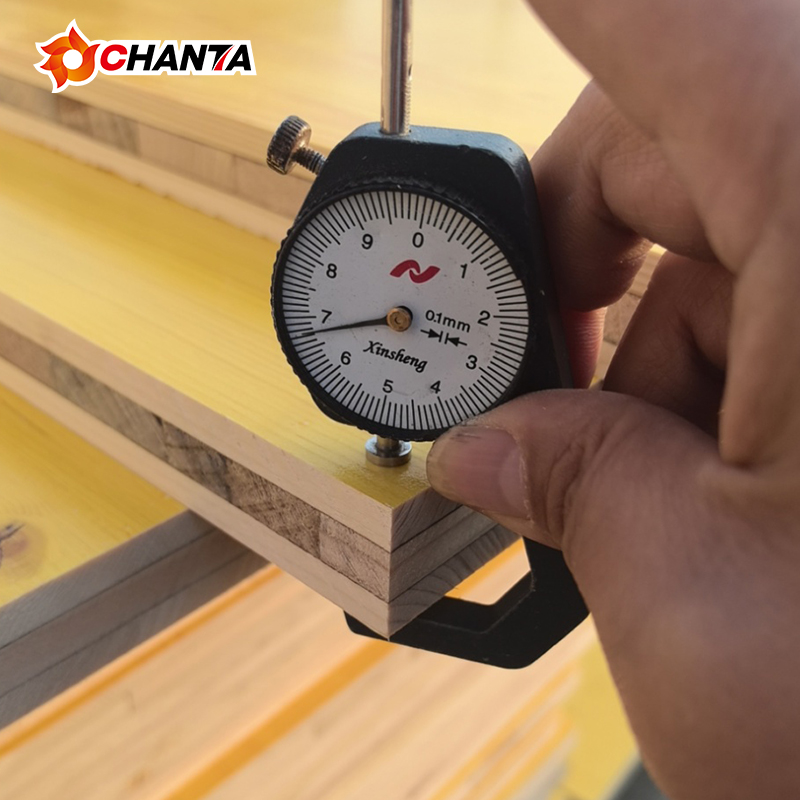
The internal core structure determines the strength and durability of film faced plywood. Even the best surface film cannot compensate for a weak or poorly assembled core.
Quality plywood uses well-arranged veneer layers that distribute pressure evenly across the panel.
Inspect the Veneer Layers
The edges of the panel reveal the internal veneer structure. High-quality plywood shows evenly stacked layers with minimal gaps.
Check Core Material Density
Hardwood cores generally provide higher strength and better durability than lightweight veneers. Panels designed for heavy construction often use eucalyptus or mixed hardwood cores.
Verify the Glue Type Used in Manufacturing
Adhesive quality plays a critical role in plywood durability. Film faced plywood used in construction should use WBP (Water Boil Proof) phenolic glue to resist moisture and repeated concrete casting.
Panels produced with lower-grade adhesives may delaminate when exposed to water or pressure.
Ask for Glue Specifications
Professional suppliers should provide clear information about glue type and bonding standards.
Observe Signs of Delamination
Visible separation between veneer layers or swelling around the edges indicates weak adhesive bonding.
Check Edge Sealing and Protection
Edges represent the most vulnerable part of film faced plywood because they expose the internal veneer layers. High quality panels include proper edge sealing to prevent water penetration.
Without effective edge protection, moisture enters the core and causes swelling or delamination.
Look for Clean Edge Painting
Quality manufacturers apply waterproof edge paint evenly across the entire panel perimeter.
Inspect Edge Integrity
Cracked or damaged edges suggest poor handling or weak core construction.
Consider Manufacturing Consistency
Reliable manufacturers maintain strict quality control throughout production. Consistency ensures that panels perform similarly across multiple shipments.
For example, experienced manufacturers such as CHANTA focus on stable raw materials, controlled pressing conditions, and consistent film quality to maintain reliable performance across production batches.
Review Supplier Experience and Production Standards
Choosing the right supplier is just as important as evaluating the panel itself. Established manufacturers usually invest more in equipment, quality inspection, and production control.
Suppliers with strong industry experience often provide more consistent products and clearer technical documentation.
Check Production Equipment
Modern hot pressing lines and automated veneer drying systems improve panel consistency.
Request Product Specifications
Professional suppliers provide detailed specifications including panel density, glue type, film weight, and moisture content.
Compare Cost Against Long-Term Performance
High quality film faced plywood may have a higher initial cost, but it often delivers better value over time. Panels with stronger cores and better film surfaces usually support more reuse cycles.
Contractors should evaluate materials based on cost per use rather than purchase price alone.
Conclusion
Identifying high quality film faced plywood requires evaluating multiple factors including surface film quality, core construction, adhesive strength, and edge protection. Buyers who understand these technical indicators can avoid low-grade products and select panels that deliver consistent performance in concrete formwork.
Working with experienced manufacturers and maintaining proper site handling practices further improves durability and project efficiency.








2 Comments